
Microplastics in Food: Why Choosing Fresh Matters


We hear a lot these days about what’s in our food—added sugars, preservatives, artificial ingredients—but there’s another concern getting more attention: microplastics.
Microplastics are tiny plastic particles that can make their way into our environment, our water, and unfortunately, our food supply. Scientists are still studying exactly what long-term exposure means for human health, but one thing is clear: reducing unnecessary exposure is a smart and practical step.
The good news? One of the simplest ways to do that may also be one of the healthiest: choosing fresh, minimally processed food.
Where Do Microplastics Come From?
Microplastics are very small pieces of plastic—often too tiny to see—that come from the breakdown of larger plastic items, synthetic materials, food packaging, and industrial processing equipment.
These particles can enter the food chain through:
soil contamination
water sources
food packaging
manufacturing and processing equipment
transportation and storage
In today’s world, avoiding them entirely is probably unrealistic. But reducing exposure? Absolutely possible.
Why Processed Foods May Carry More Risk
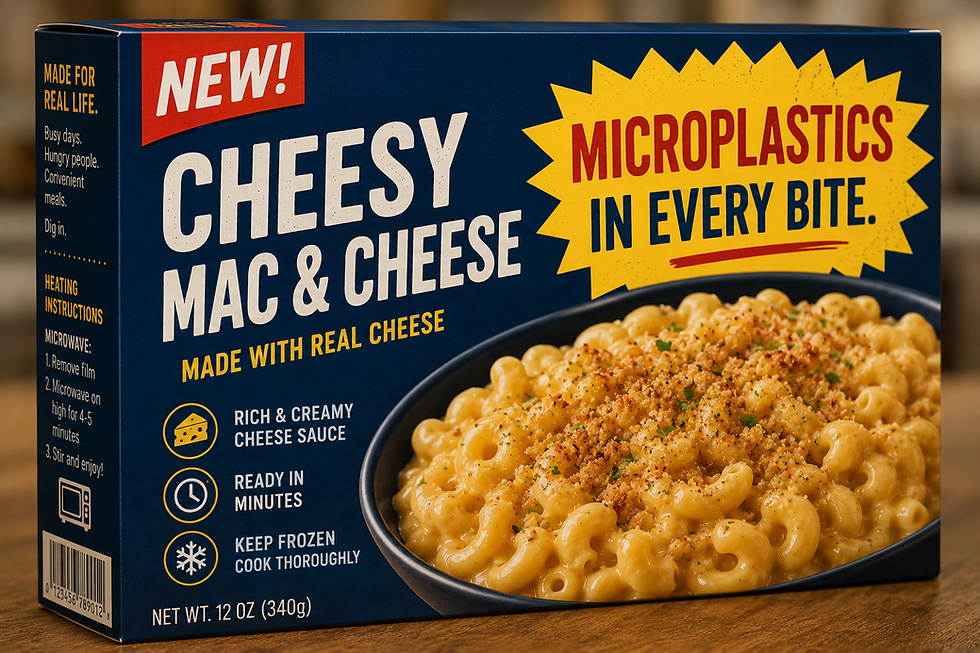
The more a food is processed, the more opportunities it has to come into contact with plastic.
Think about a fresh apple.
It’s picked, washed, transported, and sold.
Now compare that to a packaged processed food.
That product may be:
mixed in industrial equipment
pumped through plastic tubing
shaped, cut, or extruded
packaged in plastic film
boxed & shipped
Expose to heat during transport
stored for weeks or months
Every additional step creates another chance for plastic particle exposure.
That doesn’t mean convenience foods are automatically harmful—but it does mean highly processed foods generally have more contact points.
Why Fresh Food Makes Sense
Choosing fresh, whole foods offers several advantages.
Fewer processing steps
Less handling means fewer opportunities for contamination.
Less plastic packaging
Fresh produce, farm eggs, local meats, and baked goods often come with far less packaging than supermarket convenience foods.
Less heat + plastic contact
Heating food in plastic containers can increase particle shedding. Preparing fresh food at home in glass, stainless steel, or cast iron helps reduce that risk.
Shorter supply chains
Food that travels fewer miles and changes fewer hands often has fewer exposure opportunities.
That’s one of the hidden benefits of shopping local.
Fresh food isn’t just about flavor and nutrition—it can also mean fewer unnecessary contaminants.

Practical Ways to Reduce Exposure
No need to panic! Small changes can make a meaningful difference.
Choose whole foods more often
Fresh fruits, vegetables, meats, dairy, eggs, and homemade meals generally involve less industrial processing.
Avoid heating food in plastic
Transfer leftovers to: glass, ceramic, or stainless steel before reheating.
Cut back on bottled water
Reusable stainless steel or glass bottles paired with filtered water can help reduce exposure.
Store food in safer materials
Swap plastic containers for glass whenever practical.
Avoid using dishsoap in pods
Pods contain plastic, which dissolve and can be left on dishes and pans, where it will contact your food, and likely be eaten..
Shop fresh and local
Shorter food chains often mean less packaging, less storage time, and less processing. And when you do need to purchase processed foods, look for packaging that is made of paper or glass.
Better Food for a Better Life
At the end of the day, you have to be real. It's simply not possible for the average American to avoid plastics altogether, so make the changes that fit your lifestyle, and that seem reasonable to you.
We can make intentional choices.
Choosing fresh, locally grown food means:
less processing
fewer additives
less packaging
better flavor
stronger community connections
And possibly fewer unnecessary contaminants along the way, including microplastics.
That’s one more reason we believe in real food.
Better food for a better life!


Comments